Last Update: 28 August 2026
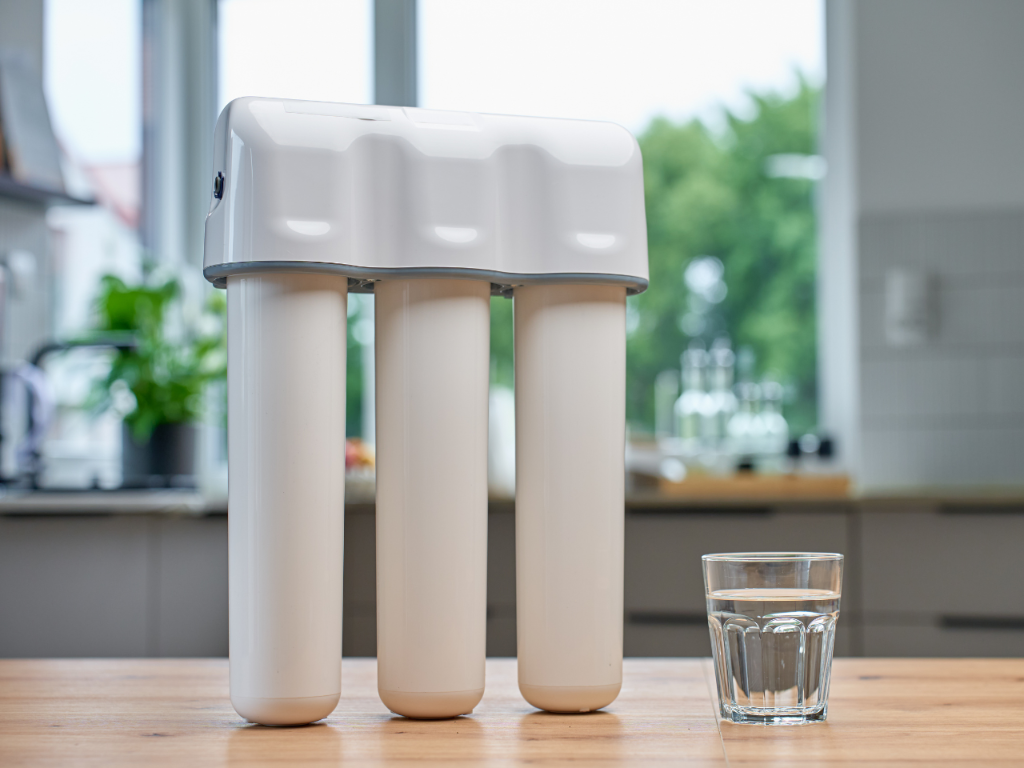
Wondering how water filtration systems work? Learn how different filtration methods reduce contaminants, including sediment, chlorine and other impurities, and discover the differences between whole-house, activated carbon and reverse osmosis systems. We also explain why Brisbane homeowners choose water filtration and the potential benefits of having cleaner, better-tasting water at home.
Everyone wants clean water in their home. But if your tap water tastes like chlorine or has visible dirt in it, you might want to invest in a good-quality water filtration system.
But which one do you choose and how do they work? My expert plumbing team at Purity Plumbing are here to answer all your questions.
How Does a Water Filtration System Work?
A water filter reduces the amount of contaminants in your tap water. Depending on the filter type, debris and contaminants are physically trapped, absorbed, or separated from the water, leaving your home’s water crystal clear and safe.
What Do Water Filters Remove?
Different water filtration systems are designed to address different water-quality issues and concerns. Some focus on the visible particles and dirt, while others reduce the amount of chemicals or microorganisms in the water.
Common chemicals and substances water filters reduce include:
- Dirt, sand, silt and sediment
- Rust
- Chlorine
- Fluoride
- PFAs (also called forever chemicals)
- Reduces the harshness of hard water
- Heavy metals
Types of Water Filtration Systems and How They Work
Reverse Osmosis Water Filtration Systems
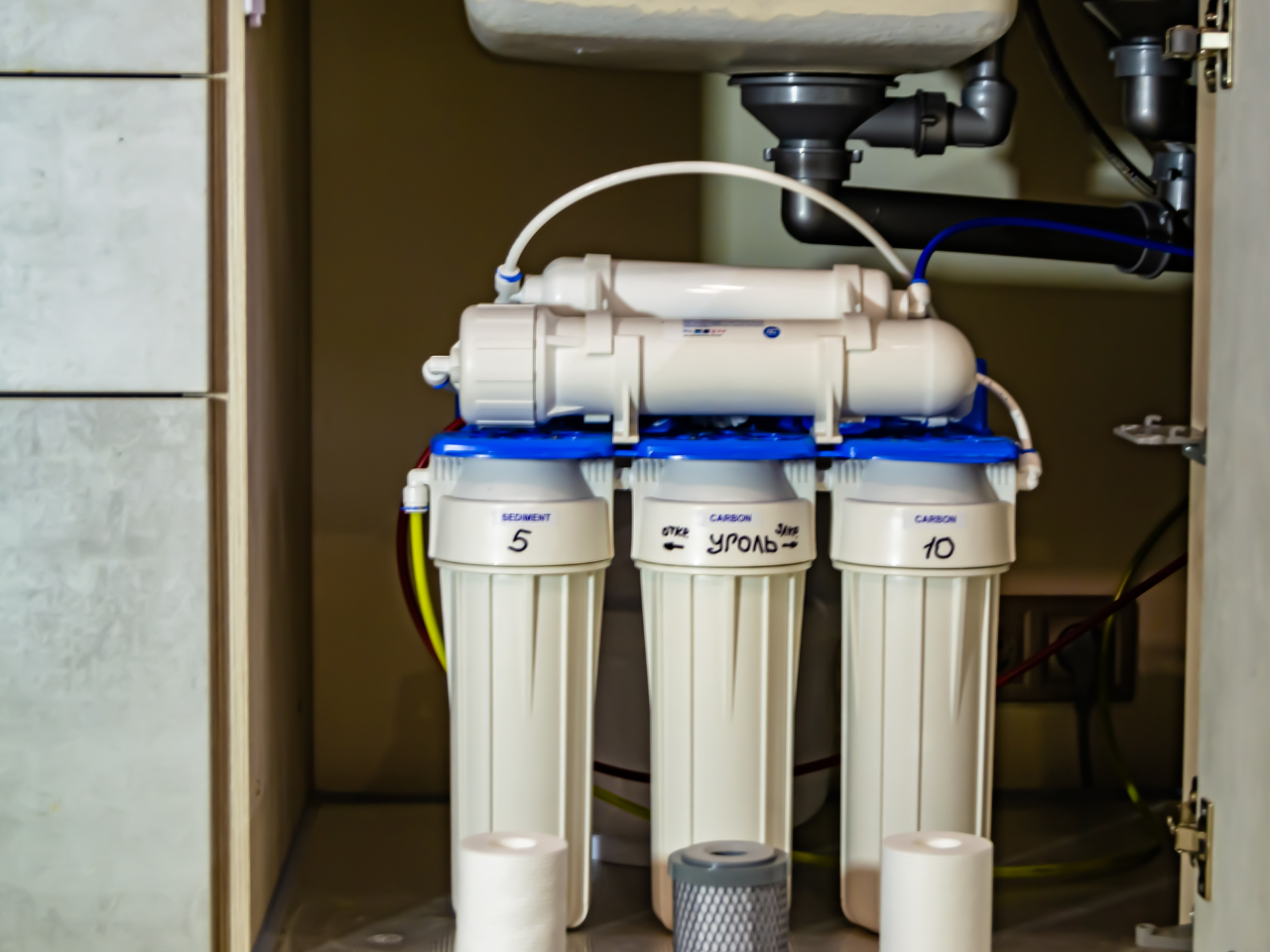
Reverse osmosis (RO) systems use a semi-permeable membrane to remove impurities at the molecular level. Water is forced through the membrane, leaving the dirt and contaminants behind. RO systems are a perfect option for Brisbane homeowners who want really purified water. They are often combined with carbon filters so they can strip away as many impurities as possible.
However, Reverse Osmosis filters are quite slow and might not be suitable for large homes.
Activated Carbon Filtration
Activated carbon filters are popular in Brisbane households and for good reason - they are incredibly effective as well as inexpensive. These filters use rough carbon material to trap harmful contaminants through adsorption (a process where pollutants stick to the carbon particles rather than being absorbed). Carbon filters are easily accessible and are highly effective at removing chlorine, sediment and bad tastes and smells from your tap water.
Ultraviolet (UV) Filters
As the name suggests, UV filters use powerful ultraviolet light to kill bacteria, viruses and microorganisms in the water. UV filters are a chemical-free way to disinfect your home's water, making them a great choice for rural homes relying on untreated sources like rainwater tanks or wells. However, they don’t remove chemicals, sediments or heavy metals, so it’s best to pair your filter with another system.
What's the Difference Between Water Filtration and Water Purification?
Water filtration and water purification are often used interchangeably; however, they refer to two different processes. Water filtration is used to remove or reduce specific contaminants as water passes through a filter. Depending on the filter type, it can remove impurities physically or chemically.
Water purification is a broader term that refers to a combination of treatment processes used to improve your water’s quality. This can include filtration, reverse osmosis, ultraviolet (UV) treatment and other forms of disinfection.
The key difference is that filtration targets specific contaminants, while purification can involve multiple treatment methods to achieve a particular level of water quality.
This is why there isn't one water filtration system that removes everything. Different filtration technologies are designed to address different water-quality concerns.
Why Do Brisbane Houses Choose Water Filtration Systems?
Brisbane's mains water is treated before it reaches your home, but some households choose to filter their water to improve its taste, smell or overall quality.
One of the most common reasons is the taste or smell of chlorine. Chlorine is used during the water treatment process to help keep your drinking water safe, but some people are more sensitive to it. Activated carbon filtration can reduce chlorine and help improve the taste of tap water.
Other reasons Brisbane homeowners may choose water filtration include:
- Reducing sediment and particles in drinking water
- Improving the taste and smell of tap water
- Having filtered water available directly from the tap
- Addressing specific water-quality concerns
- Reducing reliance on bottled drinking water
The right filtration system depends on what you want to remove from the water. A sediment filter, for example, is designed to capture physical particles, while activated carbon and reverse osmosis systems use different processes to address other water-quality concerns.
Did you know that Purity Plumbing is also a certified Puretec installer?
This means that we can supply and install all of Puretec's range of whole-house water filters and under-sink water filters, giving you the peace of mind that your water supply is protected by the best in the country.
For more information, personalised advice or to get a free quote, give our professional plumbers a call on 0485 889 120 or fill out our online enquiry form today.

References
8 Common Types of Water Filters and How They Work: Complete Home Filtration (December 2024): https://www.completehomefiltration.com.au/news-insights/8-types-of-water-filters-and-how-they-work
Do Water Filters Remove Carcinogens?: Complete Home Filtration (April 2026): https://www.completehomefiltration.com.au/news-insights/what-do-water-filters-remove
How to Unblock a Kitchen Sink: Effective Methods: My Homeware (January 2026): https://www.myhomeware.com.au/blogs/fixes/how-do-i-unblock-a-kitchen-sink?
Water Filters For Your Home: Healthy WA, Department of Health Western Australia (March 2021): https://www.healthywa.wa.gov.au/Articles/U_Z/Water-filters-for-your-home
How A Water Filter Works: Water Filters Australia (2026): https://www.wfa.com.au/how-water-filter-works/